When Should Kids Start Using AI?
There is no "perfect" age to start learning about Artificial Intelligence (AI). Instead, the most effective approach is to align learning activities with how your child naturally thinks and interacts with the world at different ages. By following a stage-based path, you can help your child build strong skills while fostering their natural curiosity.
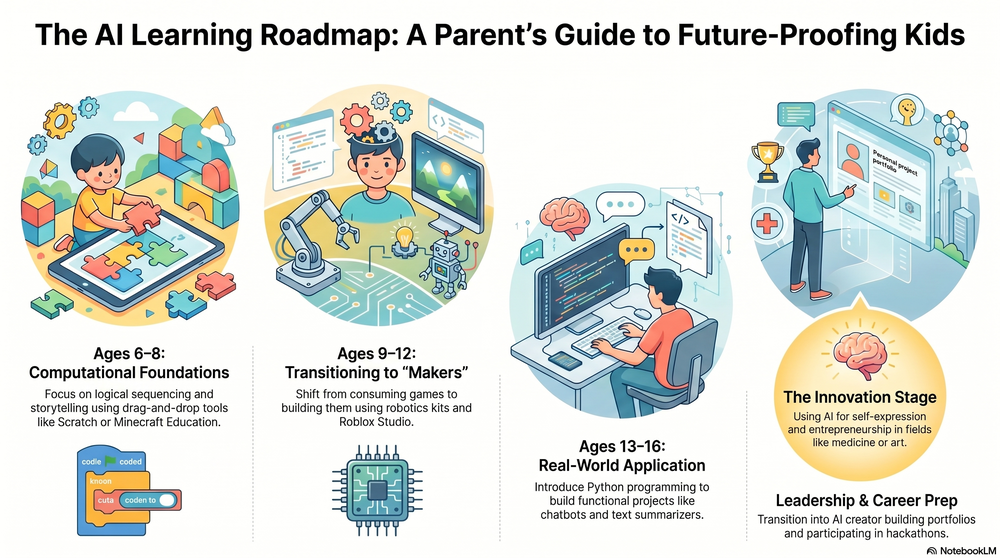
Ages 6–8: Foundations Through Play
At this stage, the goal is to introduce foundational coding concepts through visual and play-based activities. Avoid overwhelming students with complex theory or syntax; focus instead on building "computational thinking" skills.
Key Focus: Logical sequencing, problem-solving, and storytelling.
How to Engage: Use drag-and-drop block coding platforms.
Recommended Tools: Kids often thrive using platforms like Scratch, Tynker, or Minecraft Education Edition.
Ages 9–12: Building with Curiosity
Children in this age group begin to develop structured logic and want to know how things work "behind the screen". They are moving from being just game users to becoming "makers".
Key Focus: Seeing real-world results from their code—such as a robot moving or a game reacting to their input.
How to Engage: Explore robotics kits, automation tools, and game design platforms like Roblox Studio.
Next Steps: If your child asks deeper questions about technology, this is the perfect time to introduce structured AI courses for kids.
Ages 13–16: Real-World Applications
At this stage, students are ready to move from play to purpose. They can handle actual programming languages, with a focus on Python, which is widely used in AI development.
Key Focus: Building functional projects and understanding concepts like datasets, algorithms, and model training.
Hands-on Projects: Encourage them to build chatbots, work with text summarization, or try beginner generative AI tools.
The "Big Picture": Encourage them to think about how their skills can help others or be turned into a real product or app.
Ages 16+: Innovating and Leading
For older teens, AI becomes a powerful tool for self-expression, entrepreneurship, and innovation. Students can transition from being AI learners to AI creators.
Key Focus: Applying AI to their personal interests, whether that is medicine, gaming, climate, or art.
Professional Growth: Encourage them to participate in hackathons, publish projects on platforms like GitHub, or build digital portfolios.
Career Readiness: This is the time to start imagining future career paths where they can use the technology they have mastered.